
KEY HIGHLIGHTS
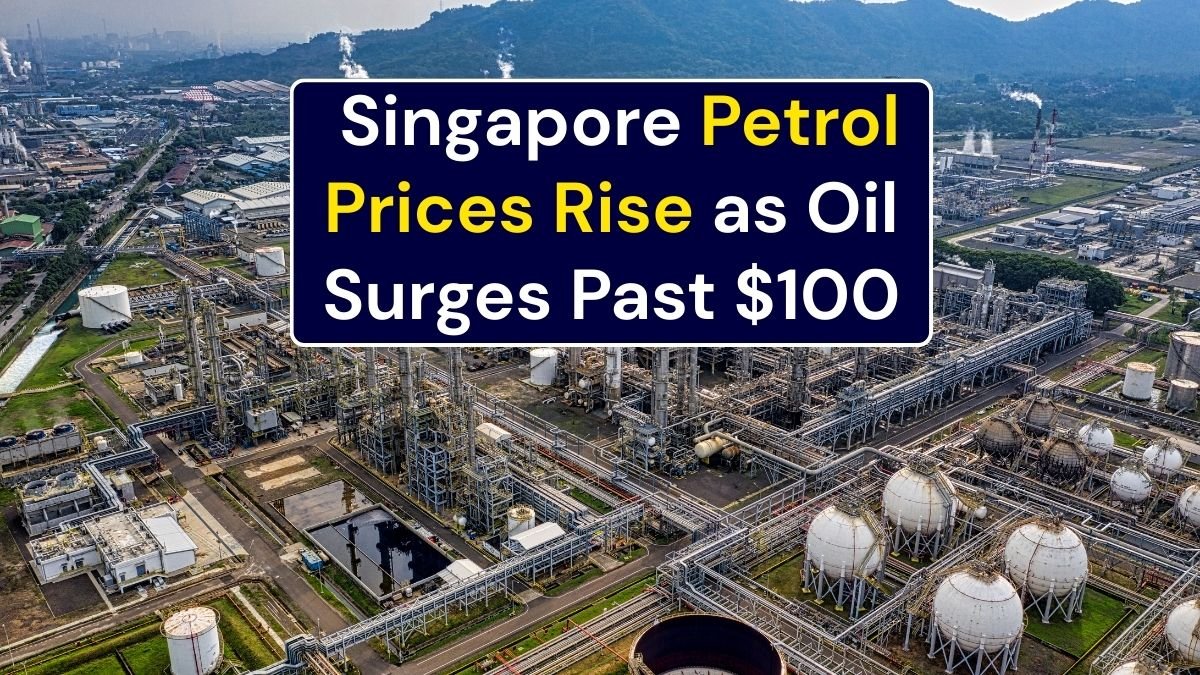
- Global oil prices surged above US$100 per barrel after attacks on Middle East energy infrastructure disrupted supply routes.
- Brent crude briefly spiked to around US$119 per barrel, raising the risk of higher petrol and electricity prices in Singapore.
- Consumers and businesses in Singapore should prepare for potential fuel and energy price increases if disruptions persist.
Singapore consumers may soon face higher petrol and electricity bills as global oil prices surge following escalating conflict in the Middle East.
Energy analysts warn that continued disruptions to oil and LNG supply routes could push costs higher across Singapore’s fuel and electricity markets.
| Key Event | Details |
|---|---|
| Oil Price Surge | Brent crude briefly reached US$119.50 per barrel on 9 March 2026 |
| Current Market Level | Oil still trading about 17% higher than last week |
| Risk Scenario | Analysts warn oil could reach US$150 per barrel if conflict expands |
| Major Supply Route | Strait of Hormuz, handling about 20% of global oil trade |
| Key LNG Supplier | Qatar, a major supplier for Singapore |
Why Global Oil Supply Is Under Pressure
The latest surge in oil prices follows attacks on energy infrastructure across several Middle Eastern countries.
Facilities in Bahrain, Kuwait, Qatar, Saudi Arabia, and the United Arab Emirates have reportedly been targeted. Israel has also struck oil infrastructure in Iran.
These attacks have disrupted energy shipments through the Strait of Hormuz, a narrow maritime corridor connecting the Persian Gulf to global markets.
About 15 million barrels of crude oil and 290 million cubic metres of LNG pass through this route daily.

Security threats to ships travelling through the waterway have intensified. Maritime agencies have recorded multiple attacks on vessels in recent weeks.
Impact on Singapore’s Petrol Prices
Petrol prices in Singapore are updated daily by retailers based on the Mean of Platts Singapore (MOPS) benchmark.
When global crude prices rise sharply, the cost of refined fuels such as petrol and diesel typically follows.
Consumers may therefore see increases at local petrol stations if elevated oil prices continue over the coming weeks.
China’s recent move to temporarily suspend certain refined fuel exports may also tighten supply across Asia, further affecting regional fuel pricing.
Electricity Prices Could Also Be Affected
Singapore generates most of its electricity using natural gas, much of which comes from overseas.

One concern is Qatar’s Ras Laffan LNG facility, a major export terminal that recently declared force majeure after an attack disrupted operations.
If LNG shipments remain constrained, power generation costs in Singapore could rise, which may eventually feed into electricity tariffs.
Why This Matters
Singapore imports almost all of its energy needs.
This means global geopolitical developments — especially those affecting major oil and gas exporters — can quickly influence domestic fuel and electricity costs.
The government typically uses policy tools and reserves to cushion short-term shocks. However, prolonged disruptions in the Middle East could still push prices higher for households and businesses.
Consumers may want to monitor fuel costs and energy usage closely if the situation continues.

Official updates:
[Link to Official Source – Apply Here]
Frequently Asked Questions
Why are petrol prices rising in Singapore?
Petrol prices are linked to global oil benchmarks. The recent surge in Brent crude prices due to Middle East conflict is pushing fuel costs higher worldwide.
How does the Strait of Hormuz affect Singapore?
The Strait of Hormuz handles around one-fifth of global oil shipments and significant LNG exports. Disruptions there can reduce supply and increase prices.
Could electricity tariffs increase?
Possibly. Singapore generates most electricity from natural gas, so higher LNG prices may eventually affect power costs.
How high could oil prices go?
Some analysts warn that if the conflict escalates further, oil prices could reach US$150 per barrel.

