
KEY HIGHLIGHTS
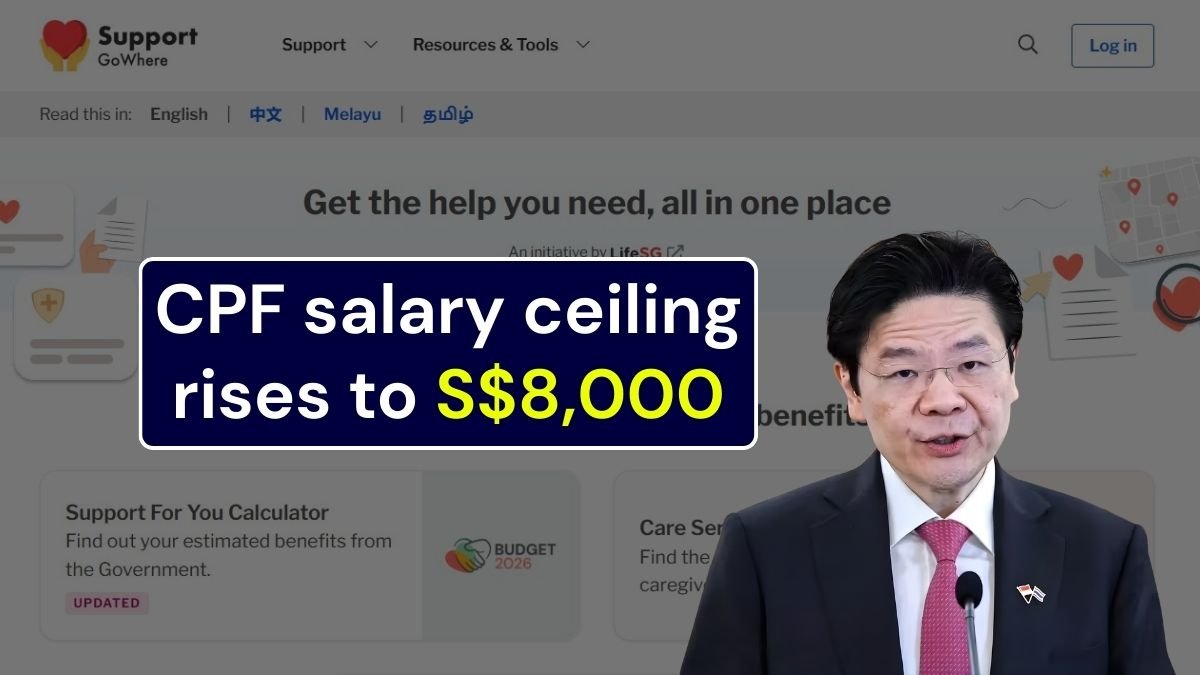
- Singapore will raise the CPF monthly salary ceiling to S$8,000 in 2026, completing a phased increase that began in 2023.
- The higher ceiling means CPF contributions will apply to more of a worker’s salary, increasing retirement and healthcare savings.
- Employees earning above previous limits should review their CPF statements and adjust financial plans for slightly lower take-home pay.
Singapore will complete a major update to its CPF contribution framework in 2026. The monthly CPF salary ceiling will rise to S$8,000, increasing the portion of wages subject to CPF contributions.
This change affects both employees and employers, particularly professionals earning above the previous contribution limits.
| Year | CPF Monthly Salary Ceiling |
|---|---|
| 2023 | S$6,300 |
| 2024 | S$6,800 |
| 2025 | S$7,400 |
| 2026 | S$8,000 |
What the CPF Salary Ceiling Means
The CPF salary ceiling determines the maximum monthly wage amount used to calculate CPF contributions.
If a worker earns above the ceiling, contributions are only calculated on the capped amount.
For example, when the ceiling reaches S$8,000 in 2026, CPF contributions will be based on the first S$8,000 of monthly wages, even if an employee earns more.
This adjustment ensures CPF savings better reflect current income levels in Singapore.
How Employees Will Be Affected
Higher CPF Contributions
Employees earning above earlier ceilings will see higher monthly CPF contributions.
For workers below age 55, the standard contribution structure remains:
- 20% employee contribution
- 17% employer contribution
Because a larger portion of salary becomes eligible for CPF contributions, more funds will flow into CPF accounts each month.
Slight Reduction in Take-Home Pay
Workers affected by the higher ceiling may notice slightly lower take-home salary.
However, the additional contributions go directly into:

- Ordinary Account (OA) – housing and approved investments
- Special Account (SA) – retirement savings
- MediSave Account (MA) – healthcare expenses
Over time, these balances grow through CPF interest rates and compounding.
Stronger Retirement Savings
Higher contributions can significantly improve retirement balances.
CPF savings form the foundation of retirement income for many Singaporeans, especially when combined with CPF LIFE payouts in later years.
Impact on Employers and Businesses
Higher Employer CPF Contributions
Employers must contribute 17% of wages for employees below age 55.
With the salary ceiling rising to S$8,000, companies may face higher CPF contributions for workers earning above previous limits.
Example scenario:
- Previous CPF cap: contributions calculated on S$6,000–S$7,400
- New CPF cap: contributions calculated on up to S$8,000
This increases payroll obligations per employee.
Impact on SMEs
Small and medium enterprises may experience moderate increases in labour costs, particularly in professional sectors with higher salaries.
Government agencies often introduce transitional support schemes to help businesses adjust to CPF policy changes.
Why This Matters
Singapore regularly reviews CPF policies to keep the system aligned with economic realities.
Three key reasons explain the ceiling increase:

1. Rising Income Levels
Median wages in Singapore have grown over the past decade. Raising the ceiling ensures CPF contributions reflect modern salary structures.
2. Retirement Adequacy
Many Singaporeans rely heavily on CPF for retirement income. Higher contributions help workers accumulate larger retirement balances over time.
3. Healthcare Needs
An ageing population means higher healthcare expenses. Increasing CPF contributions also strengthens MediSave balances, which cover medical costs and insurance premiums.
How Workers Can Prepare
Review CPF Contributions
Employees should regularly check their CPF statements through the official portal to ensure contributions are correctly credited.
Consider Voluntary Contributions
Some workers make voluntary CPF top-ups to boost retirement savings and receive tax relief benefits.
Plan Housing and Retirement Together
CPF funds are often used for HDB loan payments or mortgages. It is important to balance housing use with long-term retirement savings.
Future CPF Policy Direction
Singapore’s CPF system continues to evolve as demographics and economic conditions change.
Possible future adjustments may include:

- Changes to CPF contribution rates for older workers
- Updates to retirement payout structures
- Improvements to CPF LIFE annuity schemes
- Policies encouraging longer working careers
The goal remains to maintain a sustainable retirement and healthcare system for Singaporeans.
Official details can be verified here:
[Link to Official Source – Apply Here]
Frequently Asked Questions
What is the CPF salary ceiling in 2026?
The CPF monthly salary ceiling will rise to S$8,000 in 2026, completing a phased increase that began in 2023.
Will CPF contributions increase in 2026?
Yes. Workers earning above earlier salary ceilings will contribute more CPF because contributions will apply to a larger portion of their wages.
Will take-home pay decrease?
For employees affected by the higher ceiling, take-home salary may decrease slightly, as a larger amount goes into CPF contributions.
Why is Singapore raising the CPF salary ceiling?
The adjustment reflects higher wages, retirement planning needs, and healthcare funding requirements for Singapore’s ageing population.
Does the change affect all workers?
No. The increase mainly impacts employees earning above previous CPF salary ceilings. Workers earning below those limits will see little or no change.

