
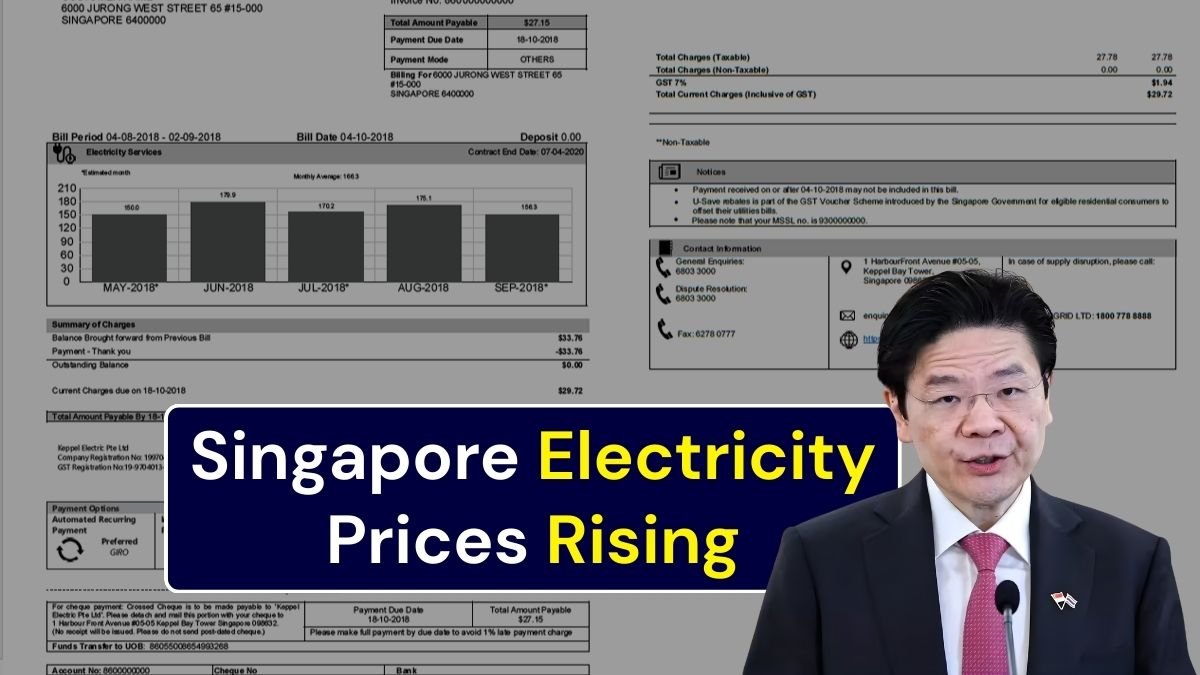
Electricity tariffs in Singapore are expected to increase in March 2026, affecting households, businesses, and commercial energy users. The adjustment reflects higher global fuel costs and changes in energy supply prices.
For consumers managing monthly utility budgets, reviewing electricity plans early can help reduce the impact of rising tariffs.
| Key Information | Details |
|---|---|
| Expected Tariff Adjustment | March 2026 |
| Main Cost Driver | Global natural gas price increases |
| Affected Groups | Households, businesses, commercial users |
| Electricity Market | Singapore Open Electricity Market (OEM) |
| Official Source | Energy Market Authority (EMA) |
Why Electricity Prices Are Increasing
Singapore generates most of its electricity using imported natural gas. When international gas prices rise, local electricity tariffs typically follow.
Other cost factors include fuel transportation, energy infrastructure maintenance, and supply security investments. These components are considered when regulators review electricity pricing.
Industries with heavy electricity use—such as data centres, financial services, and technology companies—are particularly sensitive to tariff changes because energy forms a significant part of operational costs.

Impact on Households and Businesses
For households, the tariff adjustment may lead to higher monthly utility bills, especially for families with high air-conditioning usage or larger homes.
Businesses, particularly those operating energy-intensive facilities, may need to adjust operational budgets. Many companies review commercial electricity contracts or fixed-rate plans to stabilise energy expenses.
Consumers in Singapore can also choose from multiple retailers through the Open Electricity Market, which allows users to compare pricing structures and contract terms.
Ways to Manage Higher Electricity Costs
Singapore residents and businesses can take practical steps to reduce the impact of rising electricity tariffs.
- Use energy-efficient appliances with higher efficiency ratings
- Monitor electricity usage through smart meters
- Compare fixed-price electricity plans from retailers
- Reduce unnecessary air-conditioning use during peak hours
- Consider solar energy installations where feasible
Small changes in energy usage can help lower long-term electricity expenses.

Why This Matters
Electricity tariffs influence household spending and business operating costs across Singapore. As the country relies heavily on imported natural gas, global energy trends can quickly affect local electricity pricing.
Staying informed about tariff updates helps consumers avoid sudden bill increases. Reviewing energy plans early also gives households and businesses time to switch providers or adjust consumption strategies before costs rise further.
Frequently Asked Questions
Why are electricity prices rising in Singapore in March 2026?
The increase is mainly linked to higher global natural gas prices and energy supply costs, which directly affect Singapore’s electricity tariffs.
How will the tariff adjustment affect households?
Households may see higher monthly electricity bills, depending on energy usage and their current electricity plan.
Can Singapore consumers switch electricity retailers?
Yes. Under the Open Electricity Market (OEM), consumers can choose from different electricity retailers offering various pricing plans.

How can I reduce my electricity bill?
Using energy-efficient appliances, monitoring electricity usage, and selecting competitive electricity plans can help lower overall costs.

