
KEY HIGHLIGHTS
- Singapore updates Work Permit rules in 2026 with revised foreign worker levies, quotas, and salary requirements.
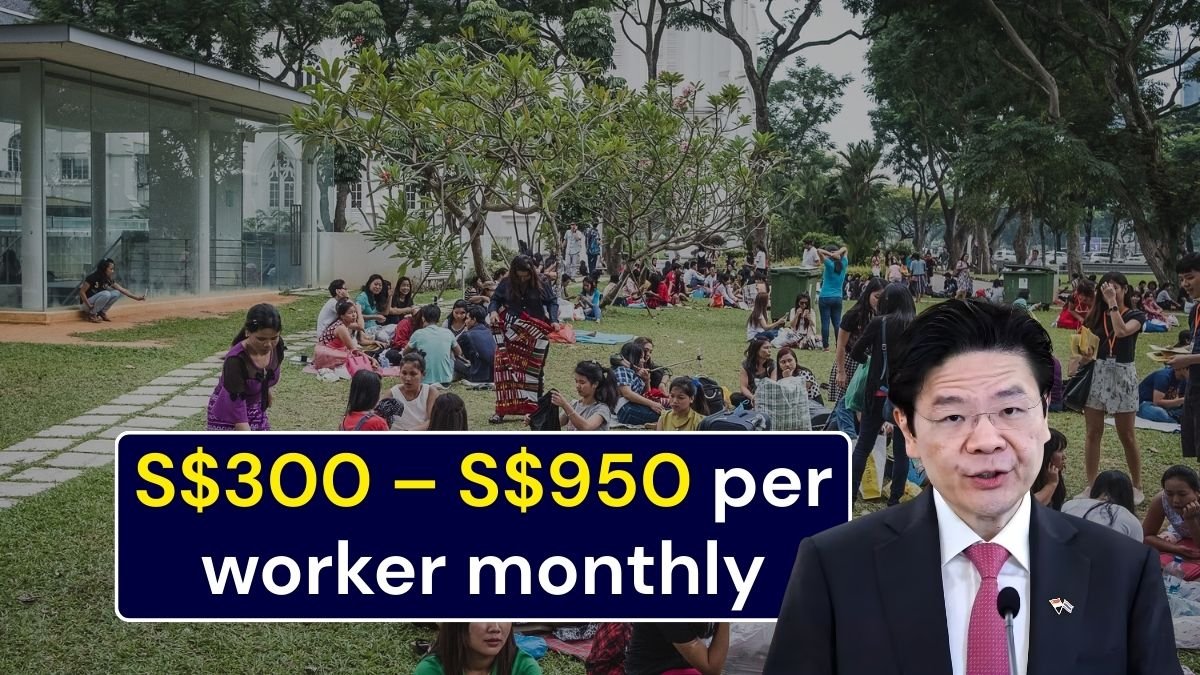
- Monthly levies range from S$300 to S$950 per worker, while the Local Qualifying Salary rises to S$1,800 from July 2026.
- Employers must review workforce planning, balance local hiring, and manage higher labour costs to stay compliant.
Singapore’s 2026 Work Permit policy updates introduce changes to foreign worker levies, hiring quotas, and local salary requirements. These rules affect employers across construction, manufacturing, services, and marine sectors.
Businesses must now reassess hiring strategies as labour costs and workforce planning requirements shift.
Key Policy Changes at a Glance
| Policy Area | Updated Rule | Impact |
|---|---|---|
| Foreign Worker Levy | S$300 – S$950 per worker monthly | Higher hiring cost for foreign labour |
| Local Qualifying Salary (LQS) | S$1,800/month from July 2026 | Minimum salary for locals counted toward quota |
| Dependency Ratio Ceiling | Sector-based limits | Restricts foreign workforce share |
| Implementation | Gradual changes during 2026 | Employers must adjust hiring plans |
Higher Foreign Worker Levies Increase Hiring Costs
Employers in Singapore must pay a monthly levy for each Work Permit holder. In 2026, levy rates continue to follow a tiered structure based on the number of foreign workers hired relative to locals.
Typical monthly levy ranges now fall between S$300 and S$950 per worker, depending on the sector and quota usage.
Companies that exceed lower tiers face higher levy charges, increasing operating expenses.
Sector Examples
Construction
Basic-skilled workers generally attract higher levy rates than certified higher-skilled workers.
Manufacturing
Levy rates are typically lower than construction but still increase when foreign worker ratios rise.
Services
Employers commonly pay around S$450–S$650 monthly per worker depending on workforce mix.
Marine Shipyard
Levy amounts vary based on worker skill level, with lower charges for skilled employees.
For firms employing large foreign workforces, even a S$50–S$100 increase per worker can significantly affect total labour costs.
Quota Limits Restrict Foreign Worker Hiring
Singapore regulates foreign labour using the Dependency Ratio Ceiling (DRC), which limits how many foreign workers companies can employ.

2026 Foreign Worker Quota Limits
| Sector | Maximum Foreign Workforce Share |
|---|---|
| Construction | 83.3% |
| Process | 83.3% |
| Marine Shipyard | 77.8% |
| Manufacturing | 60% |
| Services | 35% |
This means businesses must maintain enough local employees before hiring additional foreign workers.
Example
- A services company with 100 staff can hire only 35 foreign workers.
- A manufacturing firm may employ up to 60% foreign workers.
Companies exceeding the limit face higher levy tiers or restrictions on new Work Permit hires.
Local Qualifying Salary Increases to S$1,800
Another key update is the rise in the Local Qualifying Salary (LQS).
From July 2026, the LQS increases from S$1,600 to S$1,800 per month.
This affects employers in two ways:
- Local workers must earn at least S$1,800 to count toward foreign worker quota calculations.
- Lower-paid local staff may not be fully counted when calculating allowable foreign hires.
As a result, businesses may need to:
- Raise local salaries, or
- Reduce foreign worker numbers
Both adjustments can increase labour costs.
Sector-Specific Impact on Employers
Construction
Construction companies rely heavily on migrant labour. Higher levies and quota restrictions mean contractors may see noticeable increases in project labour costs.
Many firms are expected to adopt prefabrication, automation, and productivity technologies to reduce manpower reliance.
Manufacturing
Manufacturing companies operate under a 60% foreign worker cap. This encourages employers to balance migrant labour with skilled local workers.

Investments in automation and higher-skilled technicians are becoming more common.
Services Sector
The services sector faces the strictest quota at 35% foreign workers.
Businesses in retail, food services, and cleaning must strengthen local hiring efforts to maintain workforce stability.
Marine and Offshore Industry
The marine shipyard sector can hire up to three foreign workers per local employee, but levy costs still apply.
Future levy increases for lower-skilled workers may further raise operational expenses in shipbuilding and offshore engineering.
Strategic Hiring Decisions for Companies
Many employers are adjusting workforce strategies to manage these policy changes.
Common responses include:
Hiring higher-skilled foreign workers
Higher-skilled workers typically attract lower levy rates, reducing long-term labour costs.
Increasing local hiring
Maintaining sufficient local staff helps companies stay within quota limits.
Investing in automation
Technology reduces reliance on manual labour in sectors such as construction and manufacturing.
Workforce restructuring
Some firms are redesigning job roles to prioritise productivity and technical expertise.

Why This Matters
Singapore’s labour policies aim to ensure sustainable workforce growth while protecting opportunities for local workers.
For employers, the reforms send a clear signal:
- Dependence on low-skilled migrant labour will become more expensive.
- Companies that invest in skills, technology, and productivity improvements will adapt more easily.
Although short-term labour costs may increase, the long-term objective is a more skilled and resilient workforce supporting Singapore’s economic competitiveness.
Frequently Asked Questions
What is the foreign worker levy in Singapore for 2026?
The levy generally ranges from S$300 to S$950 per worker per month, depending on sector, worker skill level, and quota usage.
What is the Local Qualifying Salary in 2026?
From July 2026, the Local Qualifying Salary increases to S$1,800 per month.
Which sector has the strictest foreign worker quota?
The services sector has the strictest quota, allowing only 35% foreign workers.
Why is Singapore tightening Work Permit rules?
The policy encourages local hiring, productivity improvements, and reduced reliance on low-skilled migrant labour.

