KEY HIGHLIGHTS
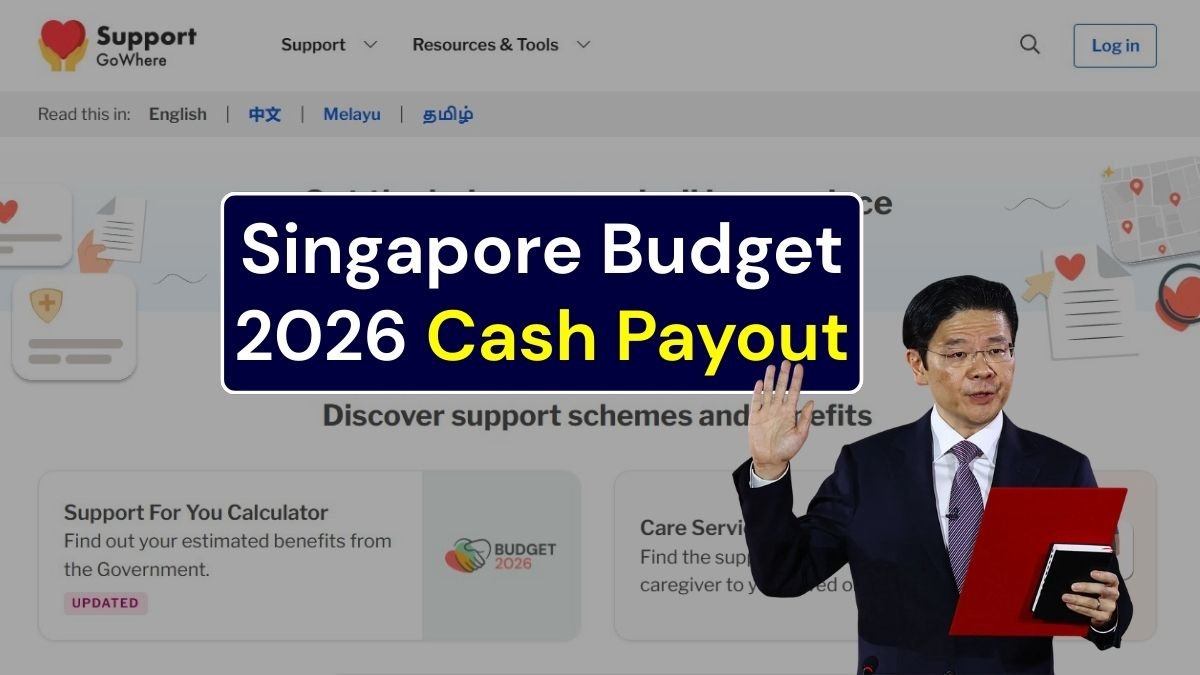
- Singapore Budget 2026 includes cash payouts and vouchers to help households manage rising living costs.
- Eligible citizens may receive up to S$800 depending on income, property ownership and household profile.
- Residents should link PayNow to NRIC and update bank details to receive payouts quickly when payments are issued.
Singapore’s Budget 2026 includes several cost-of-living support measures, including direct cash payouts for eligible citizens. These payments are part of broader assistance schemes designed to help households cope with rising daily expenses.
Many Singaporeans are now checking eligibility rules, payment timelines and payout amounts to ensure they do not miss the support announced in the national budget.
| Support Component | Estimated Amount / Details | Expected Timeline |
|---|---|---|
| Cash Payout | Up to S$800 depending on income tier | Phased payments in 2026 |
| Middle-income Support | Around S$400 – S$600 | Mid-year disbursement possible |
| CDC Vouchers | Hundreds of dollars per household | Distributed during the year |
| Utility Rebates (U-Save) | Quarterly rebates for HDB households | Throughout 2026 |
What Is the Singapore Budget Cash Payout?
The Budget cash payout is a direct financial support measure introduced by the Singapore Government to help citizens manage living costs.
It usually forms part of broader support initiatives such as:
- Cost-of-Living support packages
- Assurance Package payouts
- Community Development Council (CDC) vouchers
- Utility rebates and household subsidies
These measures help households manage expenses such as groceries, utilities, housing costs and healthcare services.
Estimated Cash Payout Amounts
The exact payout amount depends on assessable income and property ownership.
| Income Group | Estimated Cash Payout |
|---|---|
| Lower-income households | Up to S$800 |
| Middle-income households | Around S$400 – S$600 |
| Higher-income households | Reduced amount or not eligible |
Lower-income citizens and seniors typically receive higher support levels, reflecting targeted assistance policies.
Eligibility Criteria for Budget 2026 Payout
Eligibility for Singapore government payouts usually follows several key criteria.
Singapore Citizenship
Most direct cash payouts are available only to Singapore citizens.
Assessable Income
Income records from recent tax assessments determine the payout tier. Lower-income individuals usually qualify for larger payouts.
Property Ownership
Citizens owning multiple properties may receive smaller payouts or may not qualify.
Age and Household Situation
Additional support may apply to:
- Senior citizens
- Low-income households
- Families with dependants
These criteria ensure assistance reaches those most affected by rising costs.
Expected Payment Timeline
Exact payment dates are confirmed after the official Budget statement and implementation schedule.
However, payouts are usually distributed in phases.
| Phase | Expected Timing |
|---|---|
| First payment phase | Shortly after Budget announcement |
| Mid-year support payout | Around mid-2026 |
| Additional support | Later in the year if required |
Eligible recipients typically receive SMS alerts or official letters confirming payment details.
How Singaporeans Receive Their Cash Payout
The Government distributes payouts through secure digital systems.
PayNow (NRIC Linked)
The fastest payment method is PayNow linked to your NRIC. Funds are transferred directly to your bank account.
Bank Account Transfer
Citizens who previously registered their bank details with government services will receive direct bank transfers.
GovCash
Residents without bank accounts can collect their payout using the GovCash system at authorised outlets.
Additional Budget 2026 Support Schemes
Beyond cash payouts, several other assistance programmes may be included in Budget 2026.
CDC Vouchers
Households may receive CDC vouchers that can be used at participating hawkers, neighbourhood shops and supermarkets.
U-Save Utility Rebates
Eligible HDB households receive rebates that reduce electricity and water bills.
Service and Conservancy Charges (S&CC) Rebates
Residents may receive rebates covering part of their town council maintenance fees.
Senior Support Schemes
Additional assistance for seniors may include:
- Healthcare subsidies
- Special support vouchers
- Retirement support programmes
Why This Matters
Singapore uses targeted fiscal support to protect households from rising living costs while maintaining financial sustainability.
Direct payouts and vouchers help households:
- Maintain purchasing power during periods of inflation
- Manage essential expenses such as food and utilities
- Provide extra support to seniors and lower-income groups
For many families, these schemes act as short-term financial relief while longer-term policies address cost pressures.
Steps to Ensure You Receive the Payout
Singapore residents should take a few simple steps to avoid missing the payment.
Link PayNow to NRIC
This ensures faster transfers when payouts are released.

Update Bank Details
Ensure your banking information is correctly registered with government services.
Monitor Official Announcements
Follow updates from government channels for confirmed payment schedules.
Watch for Scams
Only trust messages from official sources. Government payouts do not require payment or personal verification links.
[Link to Official Source – Apply Here]
Frequently Asked Questions
How much is the Singapore Budget 2026 cash payout?
Some eligible citizens may receive up to S$800, depending on income level and eligibility criteria.
Do I need to apply for the payout?
Most payouts are automatically credited to eligible Singapore citizens. No application is usually required.
How will I know if I qualify?
Eligible residents typically receive SMS notifications or official government letters.
When will payments be credited?
Payments are usually issued in several phases throughout the year following the national Budget announcement.
Can permanent residents receive the payout?
Most direct cash payouts are meant for Singapore citizens, although some household-based benefits may include PR households depending on the scheme.
 Join
Join