
KEY HIGHLIGHTS
- Singapore core inflation rose to 1.4% in February 2026, the highest since December 2024.
- Monthly core prices increased by 0.5%, driven by higher costs in food, services, and retail goods.
- Singaporeans should monitor rising living costs, especially food and travel expenses, ahead of possible further increases.
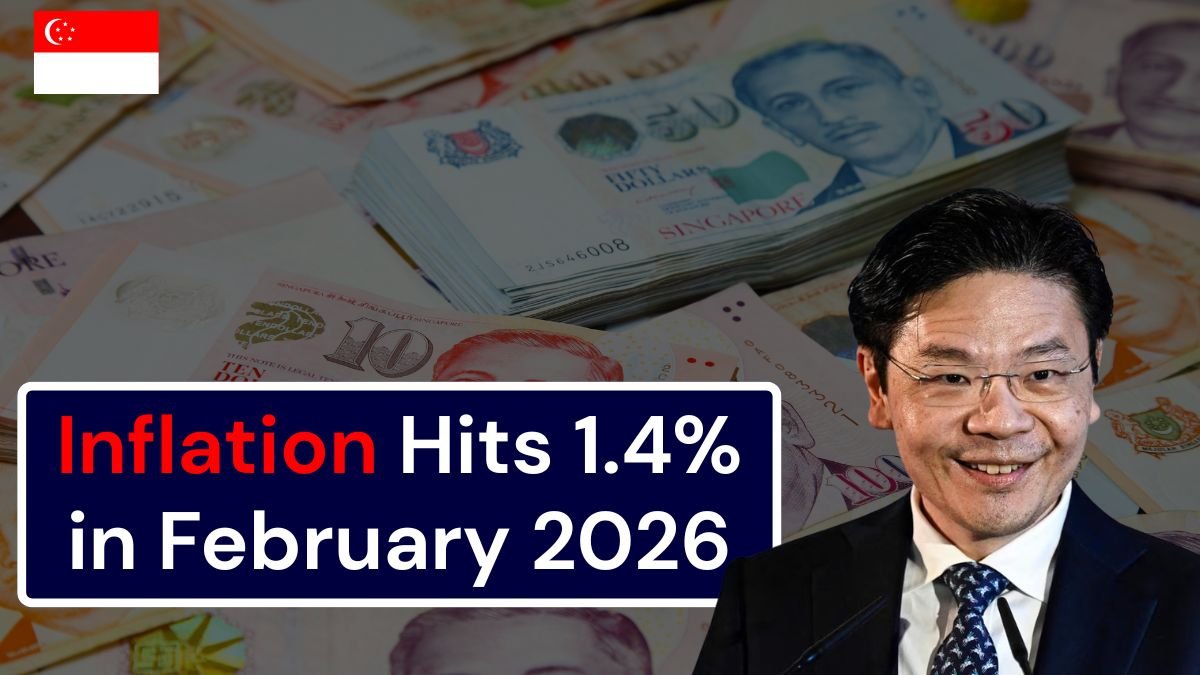
Singapore’s core inflation climbed to 1.4% in February 2026, marking its highest level since December 2024, according to official data released on 23 March 2026.
Inflation Snapshot (February 2026)
| Category | January 2026 | February 2026 |
|---|---|---|
| Core Inflation (YoY) | 1.0% | 1.4% |
| Overall Inflation (YoY) | 1.4% | 1.2% |
| Core Inflation (MoM) | — | +0.5% |
| Overall Inflation (MoM) | — | +0.6% |
What’s Driving the Increase?
The rise in core inflation was mainly due to higher costs in key daily spending areas.
- Food inflation increased to 1.6% (from 1.2%)
- Services inflation rose to 2.0% (from 1.5%)
- Retail & goods edged up to 0.6%
Short-term seasonal demand from Chinese New Year also contributed to price increases, particularly in travel and dining.
Areas Where Costs Fell
Some categories helped offset overall inflation:
- Accommodation inflation dropped sharply to 0.3%
- Private transport eased to 2.4% due to lower petrol prices
- Electricity and gas prices declined further to -4.3%
These declines kept overall inflation lower at 1.2%, despite rising core prices.

Outlook: More Price Pressure Ahead?
Authorities flagged that global energy prices have increased in recent weeks, largely due to geopolitical tensions.
Key expectations:
- Import costs may rise further in the near term
- Labour costs expected to increase moderately
- Consumer demand likely to stay stable due to wage growth
For 2026, Singapore’s inflation is projected to average between 1.0% and 2.0%.
An updated outlook will be provided in April 2026.
Why This Matters
Even a modest rise in core inflation signals increasing day-to-day expenses, especially in food, healthcare products, and travel.

For households and students:
- Budgeting becomes more important as essential costs trend upward
- Travel and lifestyle spending may feel more expensive in the coming months
- Imported goods could see further price adjustments
Monitoring inflation trends helps you plan ahead and avoid unexpected cost pressures.
What Should You Do Now?
- Review monthly expenses, especially food and services
- Plan ahead for travel or large purchases
- Stay updated on policy changes in April 2026
FAQs
1. What is core inflation in Singapore?
Core inflation excludes accommodation and private transport, focusing on everyday expenses.
2. Why did inflation rise in February 2026?
Mainly due to higher food prices, services costs, and seasonal demand from Chinese New Year.
3. Is overall inflation increasing?
No, overall inflation fell slightly to 1.2%, due to lower housing and transport costs.

4. Will prices continue to rise?
There may be upward pressure due to higher global energy prices and import costs.

